

How Much Enamel Needs to Be Removed for Porcelain Veneers in Grimsby?
November 1, 2026If you are considering porcelain veneers in Grimsby, ON, one important question is how much enamel may need to be reshaped. There is no fixed amount for every patient. Tooth position, colour, existing enamel, surface damage, and the cosmetic change you want all influence the preparation.
The aim is to create enough room for the ceramic while preserving healthy tooth structure wherever possible.
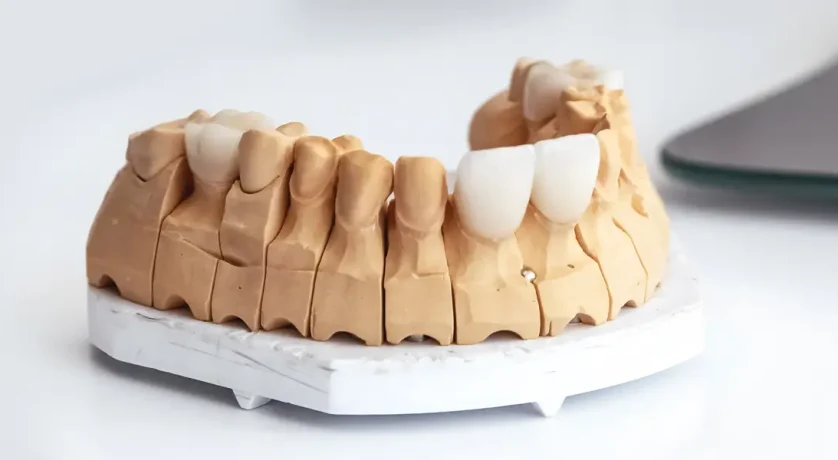
What Are Porcelain Veneers?
Porcelain veneers are thin ceramic restorations bonded mainly to the visible front surface of selected teeth. They may be considered for chipped, stained, worn, uneven, or mildly misshapen teeth, as well as certain small spaces.
Compared with a crown, veneers for teeth generally cover less tooth structure. This makes careful evaluation important because the supporting tooth still needs enough healthy enamel for reliable bonding.
The Canadian Dental Association explains that porcelain veneers usually require removal of a thin layer of enamel before the custom restoration is attached.
How Much Tooth Structure Is Usually Removed?
The amount of reshaping depends on the individual tooth.
A tooth that already sits slightly behind neighbouring teeth may need very little reduction. A tooth that projects forward may require more space so the finished ceramic does not look bulky.
Other factors, such as deeper discolouration or a larger change in tooth shape, can also affect how much room is needed.
When clinically possible, preparation is kept within enamel because enamel generally provides a favourable bonding surface.
Why Is Tooth Preparation Necessary?
Preparation gives dental veneers enough space to fit within the natural outline of the smile.
Without adequate space, the restoration may appear too thick or create an unnatural contour. Controlled reshaping allows the ceramic to be designed with an appropriate thickness, margin, and tooth profile.
Preparation may also help:
- Refine chipped or uneven edges
- Create room to mask darker colour
- Improve the contour of a prominent tooth
- Establish a clear finishing margin
- Support a comfortable fit
The amount of reduction should reflect each tooth’s condition and position rather than follow the same pattern for every patient.
Can Veneers Be Placed With Minimal Preparation?
Yes. Some teeth can be treated with very limited enamel reshaping.
Minimal preparation is more practical when enough space already exists for the ceramic. For example, a smaller or slightly recessed tooth may need less modification than one that already sits forward in the dental arch.
When comparing porcelain veneers near me, ask how much enamel is expected to be altered and whether another cosmetic option could preserve more natural tooth structure.
What Are No-Prep Veneers?
No-prep veneers are thin restorations that may require little or no enamel reduction in selected situations.
This approach is not suitable for every tooth. Adding ceramic without enough space can make the tooth look bulky or affect the final contour.
A dentist needs to consider tooth position, enamel, existing colour, bite, and the intended shape before deciding whether preparation can safely be reduced or avoided.
Factors That Determine How Much Tooth Needs to Be Removed
Several details influence the final preparation:
- Position of the tooth
- Amount of healthy enamel
- Degree of staining
- Chipped or worn areas
- Desired change in shape or length
- Existing spaces between teeth
- Bite forces
- Ceramic thickness required
If you are exploring cosmetic dentist veneers, explain the specific change you want. Preparation can vary with the amount of reshaping or colour correction needed.
For natural-looking veneers, shade, thickness, shape, and surrounding teeth should be planned together.
Untreated decay, gum disease, limited enamel, or heavy grinding may affect veneer suitability and should be assessed first.
Are Veneers Permanent?
Porcelain veneers may function for many years, but they can eventually require maintenance, repair, or replacement.
Conventional veneer treatment is generally irreversible because enamel removed during preparation does not grow back. Patients should understand the planned amount of reshaping before deciding to proceed.
Daily brushing, cleaning between the teeth, and regular dental visits remain important after treatment. Avoiding habits such as biting ice or using teeth as tools can also help protect the restorations.
FAQs
Conclusion
There is no universal amount of enamel that must be removed for a porcelain veneer. Preparation depends on tooth position, available enamel, colour, bite, desired shape, and the space needed for the ceramic.
Patients from nearby communities such as Beamsville, Vineland, Smithville, Stoney Creek, and St. Catharines can also consider a cosmetic evaluation in Grimsby when exploring veneer treatment.
A cosmetic assessment can clarify whether conventional preparation, minimal reshaping, or another treatment would better preserve healthy tooth structure while meeting your smile goals.
Considering veneer treatment in Grimsby? Bartlett & Main Family Dental Centre can evaluate your teeth and explain how much preparation may be appropriate before you decide whether veneers are right for you.